Shoulder Arthroscopy
Shoulder Arthroscopy is a minimally invasive surgical procedure used for both the diagnosis and treatment of various diseases and injuries of the shoulder joint.
Duration of surgery: 120 minutes.
Hospital stay after surgery: 3-5 days.
Diagnostic Arthroscopy of the Shoulder
Minimally invasive procedures for the diagnosis and treatment of shoulder diseases include Diagnostic Arthroscopy of the Shoulder – the gold standard of therapy, recognized by specialists worldwide. The advantages of this technique include:
- Short examination time – the procedure rarely lasts more than an hour.
- Rapid tissue healing, which means short hospitalization – up to four days in uncomplicated cases.
- The technique is completely objective; medical staff sees the intra-articular tissues with their own eyes. Video recording is available for consultation with other specialists.
- Damage to surrounding tissues is minimal, and the cosmetic effect of the procedure is excellent.
- Postoperative rehabilitation takes a short period of time compared to a full surgical procedure through a wide incision.
Description of the Procedure and Technology
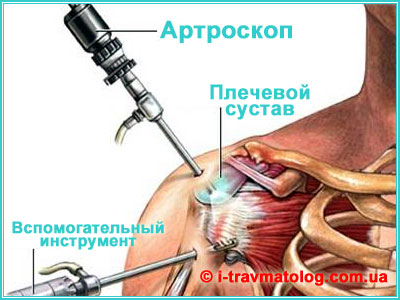
Arthroscopy represents an advanced technique that allows the surgeon to operate inside the joint while minimizing trauma to surrounding tissues.
- Minimally Invasive: The operation is performed through small incisions (punctures) in the skin (usually up to 1 cm).
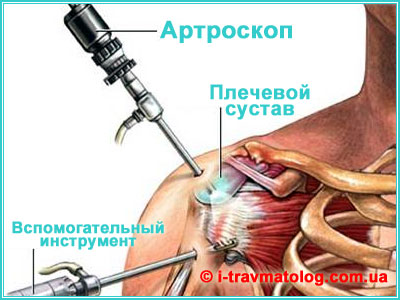
- Use of an Arthroscope: A thin tube with a camera (arthroscope) is inserted into the joint, transmitting the image to a monitor, allowing the surgeon to view the internal structures of the joint magnified.
- Surgical Instruments: Specialized thin instruments are inserted through other miniature punctures to perform the necessary manipulations (resection, suturing, fixation).
- Irrigation: During the operation, the joint is continuously filled with sterile fluid to improve visibility and flush out debris.
Preparation for Surgery and Anesthesia
Before the surgery, the patient undergoes a thorough pre-operative examination, which includes:
- Laboratory Tests (complete blood count, urinalysis, biochemistry, coagulogram).
- Instrumental Diagnostics (ECG, chest X-ray if necessary).
- Specialist Consultations (therapist, anesthesiologist).
- Diagnosis Confirmation using MRI or CT scans.
The procedure itself is usually performed under regional anesthesia (brachial plexus nerve block), which ensures the absence of pain during and for some time after the surgery. General anesthesia may be used at the patient's request or when indicated.
Advantages of Arthroscopy
Due to its minimal invasiveness, arthroscopy offers a number of significant advantages over traditional "open" surgeries:
- Rapid Recovery: Thanks to minimal tissue damage, the rehabilitation period is usually shorter, and the hospital stay is reduced to 1–2 days (sometimes just one day).
- Reduced Risk of Complications and Pain Syndrome.
- Cosmetic Effect: Only small, barely noticeable scars remain on the skin.
- High Precision: Ensures accurate execution of surgical maneuvers under visual control.
- Early Mobilization: The patient can start rehabilitation exercises sooner.
Indications for Shoulder Arthroscopy
Arthroscopy allows effective treatment of a wide range of shoulder pathologies. Indications for shoulder arthroscopy may include:
- Rotator Cuff Injuries (tendon tears requiring suturing).
- Shoulder Instability (recurrent dislocations and subluxations), often associated with Bankart lesions.
- Labral Tears (e.g., SLAP tear, detachment of the labrum from the glenoid socket).
- Impingement Syndrome (subacromial conflict, or "impingement syndrome," requiring decompression).
- Adhesive Capsulitis ("frozen shoulder") at the stage of established contracture (for capsular release).
- Chondromatosis (presence of loose bodies in the joint that need to be removed).
- Long Head of the Biceps Tendon Injury.
- Diagnosis for clarifying the diagnosis in chronic pain syndrome when non-invasive methods (ultrasound, MRI) do not provide a complete picture.
Rehabilitation and Prognosis
The success of arthroscopy largely depends on the quality of post-operative rehabilitation. It begins almost immediately after surgery and includes:
- Immobilization (wearing a special sling or brace) for a certain period to protect the repaired structures.
- Therapeutic Exercises (Physiotherapy) – strictly dosed and gradually increasing exercises to restore range of motion, flexibility, and muscle strength.
- Physiotherapy Procedures (massage, magnetotherapy, laser therapy) to reduce swelling and accelerate healing.
The time required for full recovery varies depending on the complexity of the surgery and the individual characteristics of the patient, but usually ranges from a few weeks to several months. Returning to sports activities takes a longer period.
Possible Risks
Although arthroscopy is considered a safe procedure, like any surgical intervention, it carries minimal risks that the patient should be aware of:
- Infection.
- Damage to nerves or blood vessels (extremely rare).
- Bleeding, swelling.
- Joint stiffness.
Modern techniques and adherence to all safety protocols minimize the likelihood of such complications.
If you have shoulder joint problems, it is necessary to consult an orthopedic traumatologist for accurate diagnosis and to determine if arthroscopy is indicated for you.