Surgery - Osteosynthesis for joints
Osteosynthesis - is a surgical procedure aimed at restoring bone integrity by means of reduction (reposition) of bone fragments and their stable fixation using specialized implants (metal constructs) until complete union is achieved.

Osteosynthesis of the following joints:
Osteosynthesis for joints, or more specifically, for intra-articular and periarticular fractures, is of particular importance as its goal is to restore the anatomical shape of the joint surface as accurately as possible to ensure proper joint function and prevent the development of complications such as arthrosis.
What is Osteosynthesis?
- Essence: Surgical joining of fractured bone fragments using specialized fixation devices (plates, screws, nails, pins).
- Goal: To ensure rigid and stable fixation of fragments in the anatomically correct position for their rapid and proper consolidation.
- Advantages: Allows avoidance of prolonged plaster immobilization, reduces the risk of complications (e.g., muscle atrophy, contractures), and promotes earlier restoration of motor function.
Indications for Joint Osteosynthesis
Surgical treatment (osteosynthesis) is typically indicated for complex fractures, especially those involving the joint or located in its immediate vicinity.
Key indications:
- Intra-articular fractures with displacement of bone fragments (when fragments are located inside the joint).
- Periarticular fractures (near the joint) where achieving and maintaining correct anatomical reduction is impossible with conservative methods (plaster cast).
- Avulsion fractures (e.g., patella, olecranon).
- Ineffectiveness of conservative treatment.
- Risk of contracture development (restriction of mobility) due to prolonged immobilization.
Types of Osteosynthesis
Based on the location of the fixation devices and the surgical technique, two main types are distinguished:
- 1. Internal (Submerged) Fixation:Fixation elements are entirely placed inside the patient's body beneath the skin.
- Examples of Constructs: Plates and screws (plate fixation), nails/rods (intramedullary fixation), pins, screws.
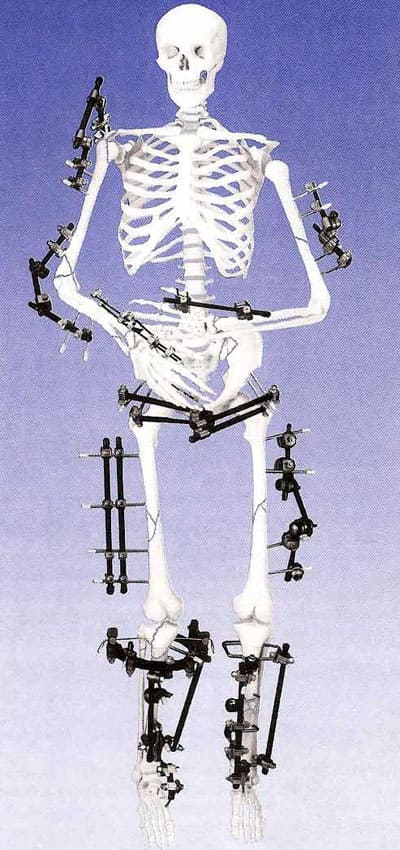
- 2. External (Transosseous) Fixation:Fragments are joined by pins or rods that exit externally and are secured to an external fixation apparatus (e.g., Ilizarov fixator).
- Examples of Constructs: External fixation apparatuses.
For intra-articular and periarticular fractures, internal osteosynthesis utilizing plates and screws (plate fixation) or specialized screws and pins (transosseous) is most commonly used, as it provides the most accurate fixation of the joint surface.
Rehabilitation
Osteosynthesis is only the first stage of treatment. Success largely depends on properly conducted rehabilitation, which begins in the early postoperative period.
- Objectives: Restoration of blood circulation, prevention of muscle atrophy, joint mobilization.
- Measures: Medication therapy, therapeutic exercise (physiotherapy), physical therapy procedures, massage.
Complete bone union and removal of metal constructs (if necessary) typically occur between 2 and 12 months, depending on the complexity and location of the fracture.
Osteosynthesis for intra-articular and periarticular fractures is a highly effective treatment method that ensures not only bone union but also the most accurate possible restoration of joint anatomy. This is critically important for preserving full motor function, rapid return to normal life, and preventing disabling arthrosis.